
Commercial glass restoration
Hard water staining, mineral deposits, corrosion and etching come out of architectural glass without replacing a single pane. What follows is where the staining comes from, why most methods make it worse, and what Presto uses instead.
Replace a stained window
$350 to $8,000 each
Restore the same window
$5 to $20 in product
Where glass stains come from
Every building meets a different combination of these, for a different length of time, which is why no two facades stain the same way.
Window cleaning detergent
Surfactants and oils build up as soap scum, then attract dust and dirt.
Hard tap water
High mineral content water used during cleaning dries and leaves the minerals behind.
Runoff from concrete and precast
Water erosion carries minerals down the facade and onto the glass.
Sprinkler systems
High mineral content water hitting the glass directly, over and over.
Overspray
Careless waterproofing and painting work lands where it was never meant to.
Failing caulk and coatings
As sealant deteriorates it leaches onto everything below it.
Rusting metal
Contaminants leach out of adjacent metal and run onto the glass.
Failed water repellents
UV-sensitive treatments break down and leach once they stop performing.
Atmospheric pollution
Acid rain, dust and other man-made pollution settling on the surface.
Replace the glass, or restore it
Restoration is not a small job and it is not free. It is still a fraction of replacement, and the gap only widens the longer stained glass stays exposed to whatever is causing it.
Replace
$350 to $8,000
per window, before labour, access and disruption to tenants.
Restore
$5 to $20
per window in product cost, with the original glass left in place.
Why most glass restoration fails
Two methods dominate the market, and both solve the stain by damaging the glass.
Abrasives
Grinding the stain off scratches the glass. You have traded a stain you can wash for damage you cannot, and on a curtain wall the scratches catch the light from the street.
Acid
Products built on hydrofluoric acid burn the glass and leave a haze. They are also washed down the side of the building, so they damage window frames and precast on the way past, and they are a hazard to the people applying them.
Presto’s system uses neither. The one acid-based product in the line, Glass ReSurfacer Stripper, exists for heavy mineral staining that will not come off any other way, and its data sheet says to use it only when it is genuinely necessary.
Restore, protect, maintain
The three stages are designed to work with each other. Restoring without protecting means the same stains come back.
Step one
Restore
Take the staining, light scratches and etching out of the glass that is already on the building.
- Glass ReSurfacer Final Polish, the machine polish
- EnviRestore Glass Stain Remover, by hand, no machinery
- Glass ReSurfacer Stripper, heavy staining only
Step two
Protect
Fill the porous surface so water beads and runs off instead of drying on the glass and leaving its minerals behind.
- Glass Defender, an invisible coating that will not fade, crack or peel
Step three
Maintain
Most glass restores once and then never needs it again, provided the routine is right.
- Clean two to three times a year with deionised water
- Reapply Glass Defender on a schedule set for the building. Ask a Presto representative
- Seal the precast with Leach Stop every 5 to 15 years as needed, so it stops leaching onto the glass below
The glass line
Seven products. Prices, coverage figures and ordering are on the product range page.
Restoration
- Glass ReSurfacer Final PolishRemoves stage 1 and 2 corrosion, light scratches and etching.
- Glass ReSurfacer StripperStrips heavy mineral staining before the final polish. Acid based, used only where needed.
- EnviRestore Glass Stain RemoverA cream that takes stubborn stains off by hand, with no machinery.
- ScumFreeWindow cleaning concentrate for the routine cleaning between restorations.
Protection
- Glass DefenderInvisible coating that guards the glass against most stains and minor scratching.
Equipment
- Glass ReSurfacer Pad 6"The polishing pad the Final Polish system runs on.
- Backer Pad 6"Backs the polishing pad on a variable speed polisher or random orbital sander.
Glass we have already done
Every product in the line was developed on live restoration projects before it was sold to anyone.
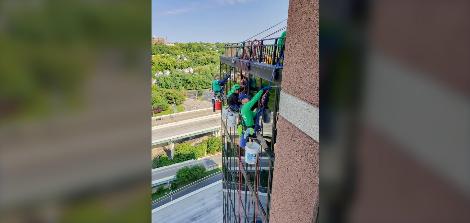

8401 Arlington Blvd
The first job where the glass had to be stripped before it could be polished.
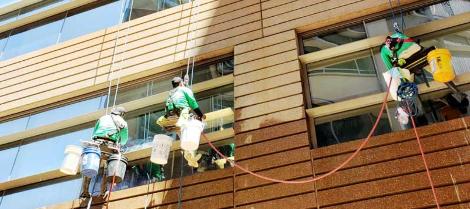
Would rather not do it yourself?
Presto's own crews restore glass on large commercial buildings across the country, using these same products. If you have a large project and would rather not do the work yourself, tell us about the building.